
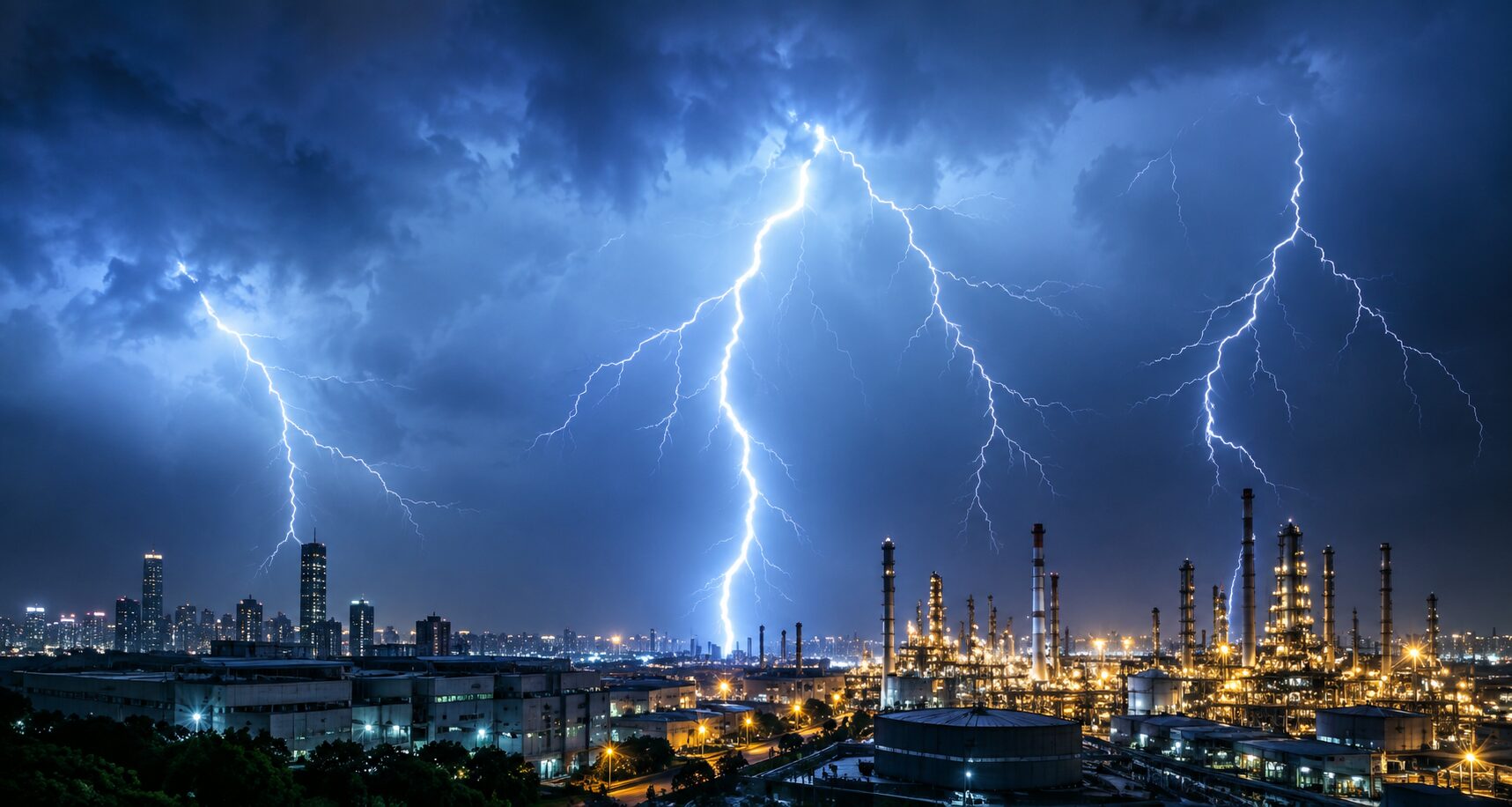
From consultation and system design to installation, testing, certification, and maintenance, we provide complete protection for every critical facility.
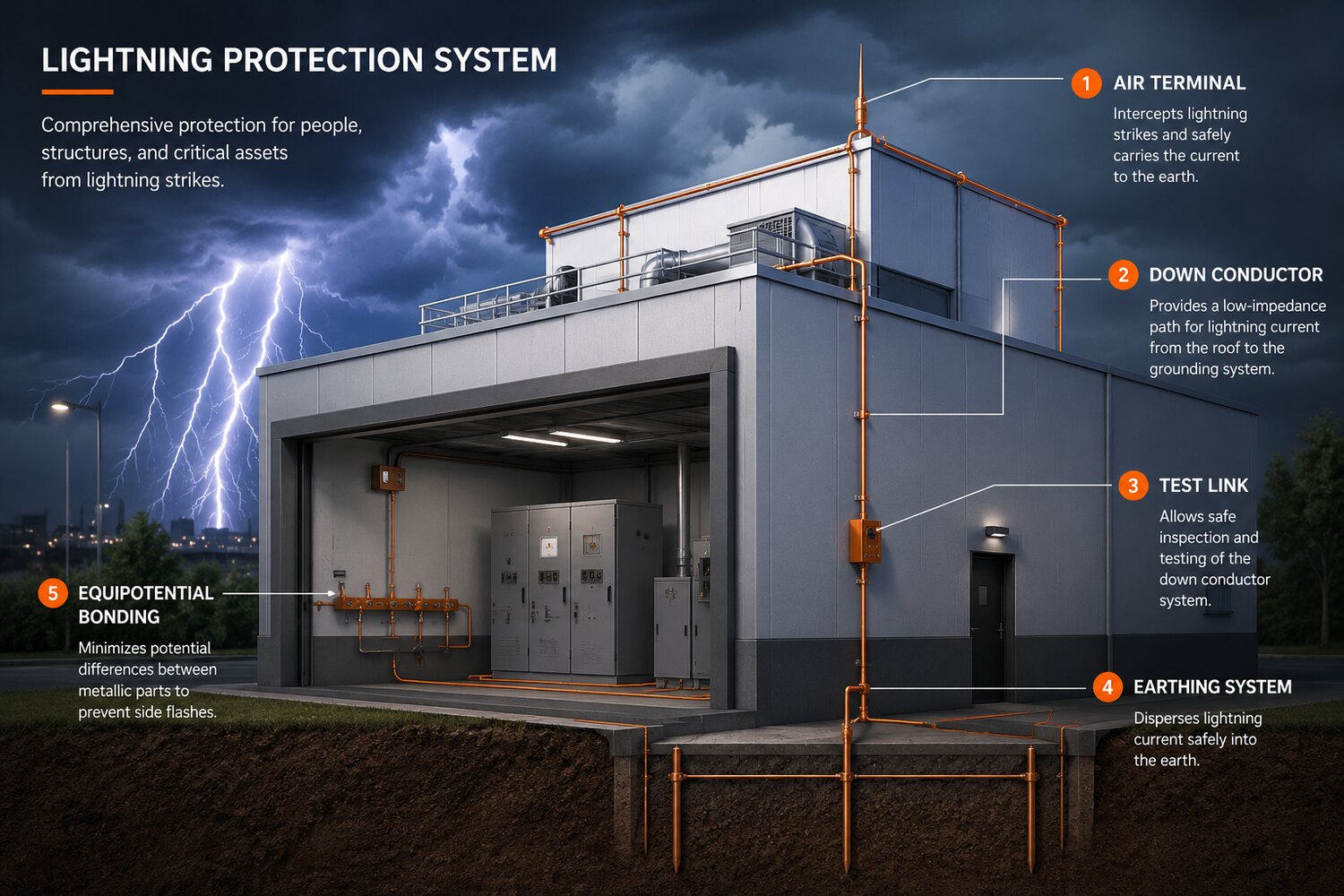
A Lightning Protection System provides a safe and controlled path for lightning current to travel from the top of a structure into the earth. Instead of allowing lightning to pass through the building and damage equipment, the system intercepts and safely dissipates the electrical energy.
Installed at the highest point of the building, the air terminal is designed to intercept a lightning strike before it reaches the structure.
Once lightning is captured, the down conductor carries the electrical current safely down the exterior of the building using a low-resistance path.
The test link provides an accessible point for inspection and maintenance, allowing engineers to verify that the system remains in good working condition.
The earthing (grounding) system disperses the lightning energy deep into the ground, preventing dangerous voltages from remaining within the structure.
All major metallic components are interconnected to eliminate voltage differences during a lightning event, reducing the risk of side flashes and protecting both people and sensitive equipment.
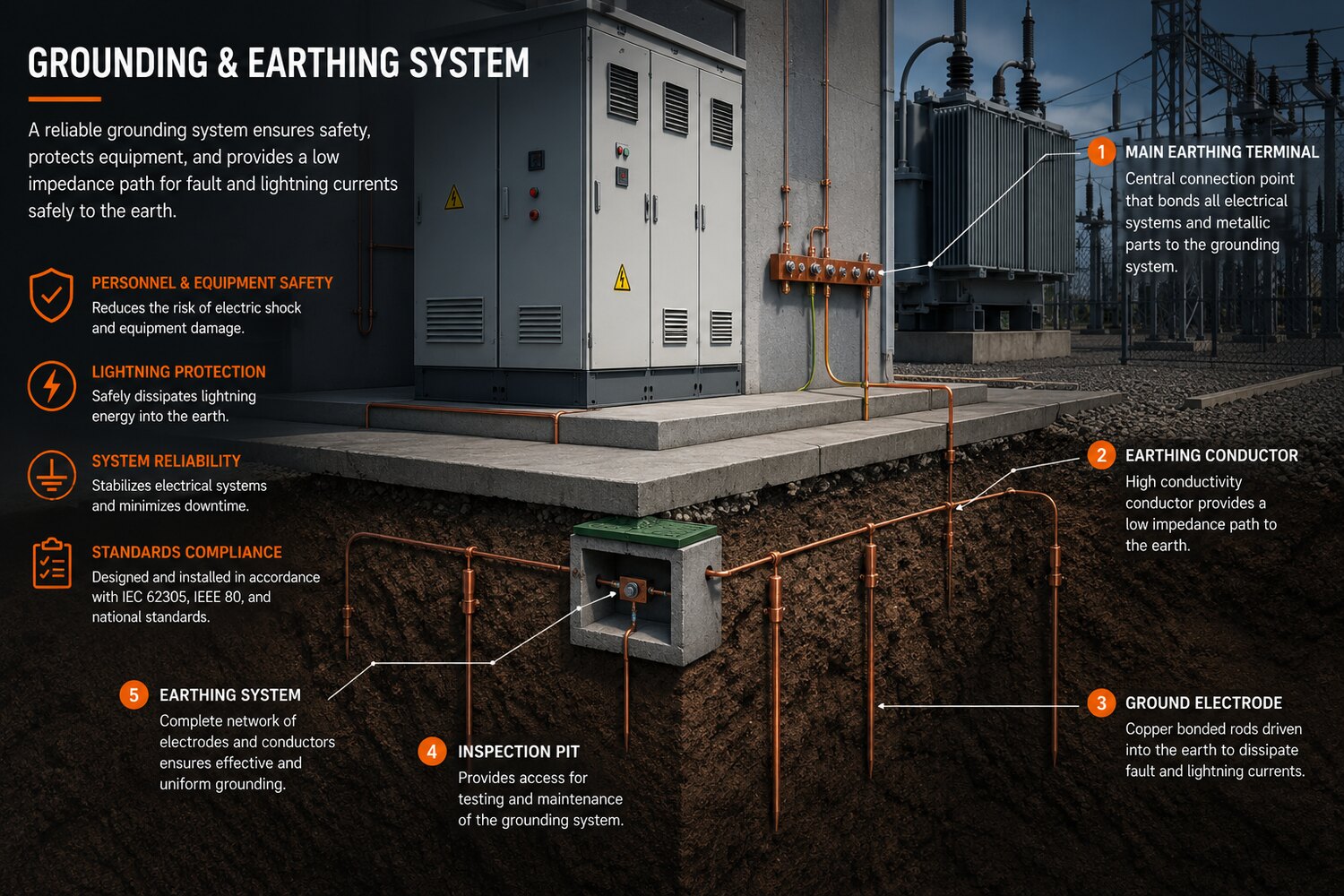
A grounding and earthing system creates a low-resistance path that safely transfers electrical fault currents and lightning energy into the earth. This prevents dangerous voltages, protects sensitive equipment, and improves the overall safety and reliability of electrical installations.
The central connection point where the building's electrical system, metallic structures, and protective conductors are bonded together before connecting to the grounding network.
Carries electrical fault current safely from the equipment or electrical installation to the grounding system using a low-impedance path.
Ground electrodes, such as copper-bonded rods, are installed deep into the soil to disperse electrical energy safely into the earth.
Provides easy access to the grounding connection, allowing technicians to perform testing, maintenance, and resistance measurements without excavation.
The complete earthing system consists of interconnected conductors and ground electrodes working together to provide stable, reliable, and effective grounding for the entire facility.
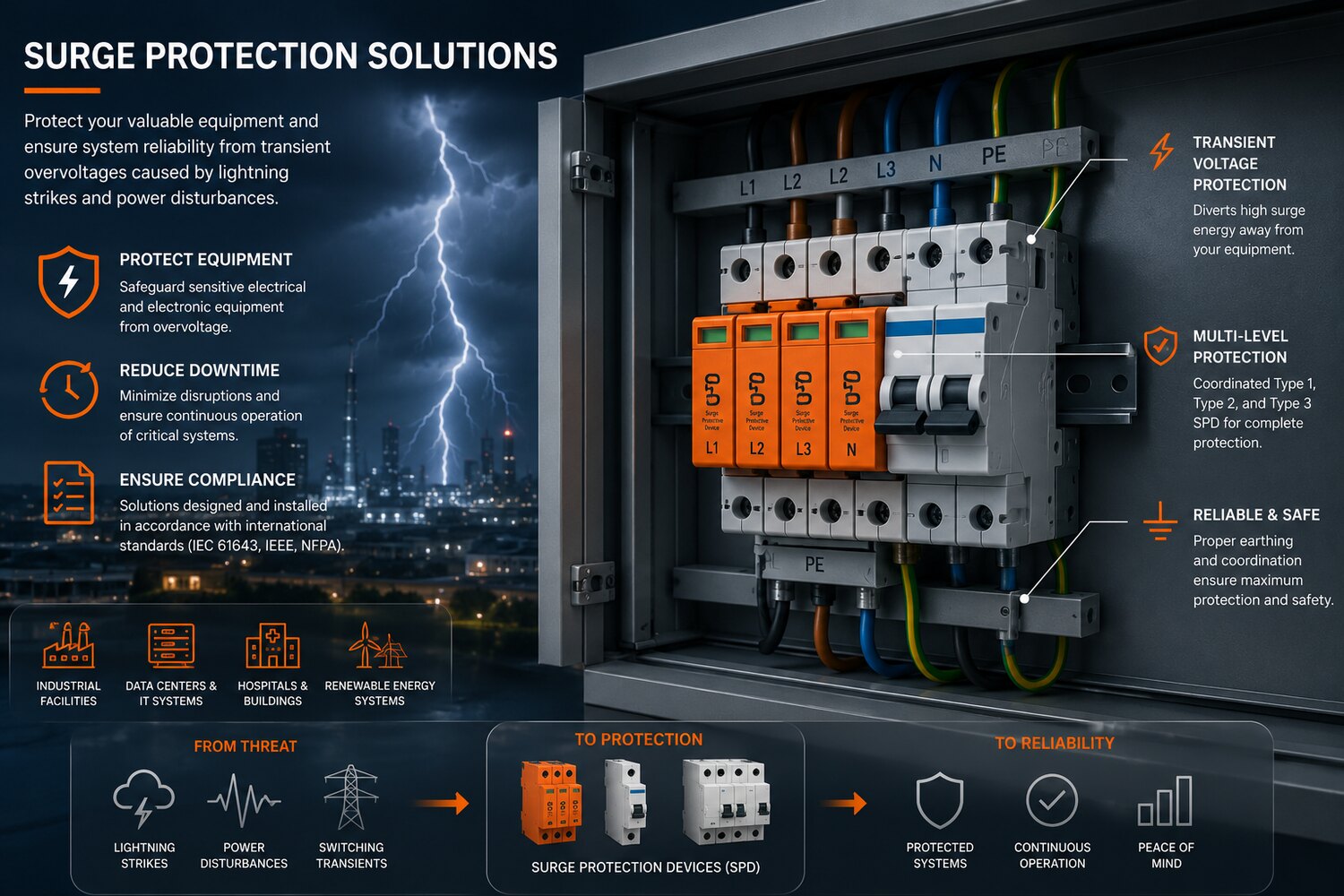
A Surge Protection Device (SPD) is designed to detect dangerous voltage surges and divert excess electrical energy safely to the grounding system before it reaches sensitive equipment. This helps prevent damage, reduces downtime, and ensures the continuous operation of critical electrical systems.
The SPD continuously monitors the electrical supply. Under normal conditions it remains inactive; when a surge occurs, it reacts within microseconds, redirecting the excess voltage safely to earth.
Type 1 protects against direct lightning currents, Type 2 protects distribution panels from switching and induced surges, and Type 3 provides additional protection for sensitive electronic equipment at the point of use.
An SPD is only as effective as its grounding system. A low-resistance earthing network allows surge energy to be discharged quickly and safely into the ground.
Every facility has unique risks and protection requirements. Whether you're planning a new installation, upgrading an existing system, or ensuring compliance with industry standards, our engineering team is ready to help.